Wholesale Lab-Grown Diamonds: A Sample Order Checklist
A wholesale lab-grown diamond sample order should connect each loose stone with its grading report and order record. Use this checklist to clarify specifications, delivery expectations and repeat-order requirements before committing.
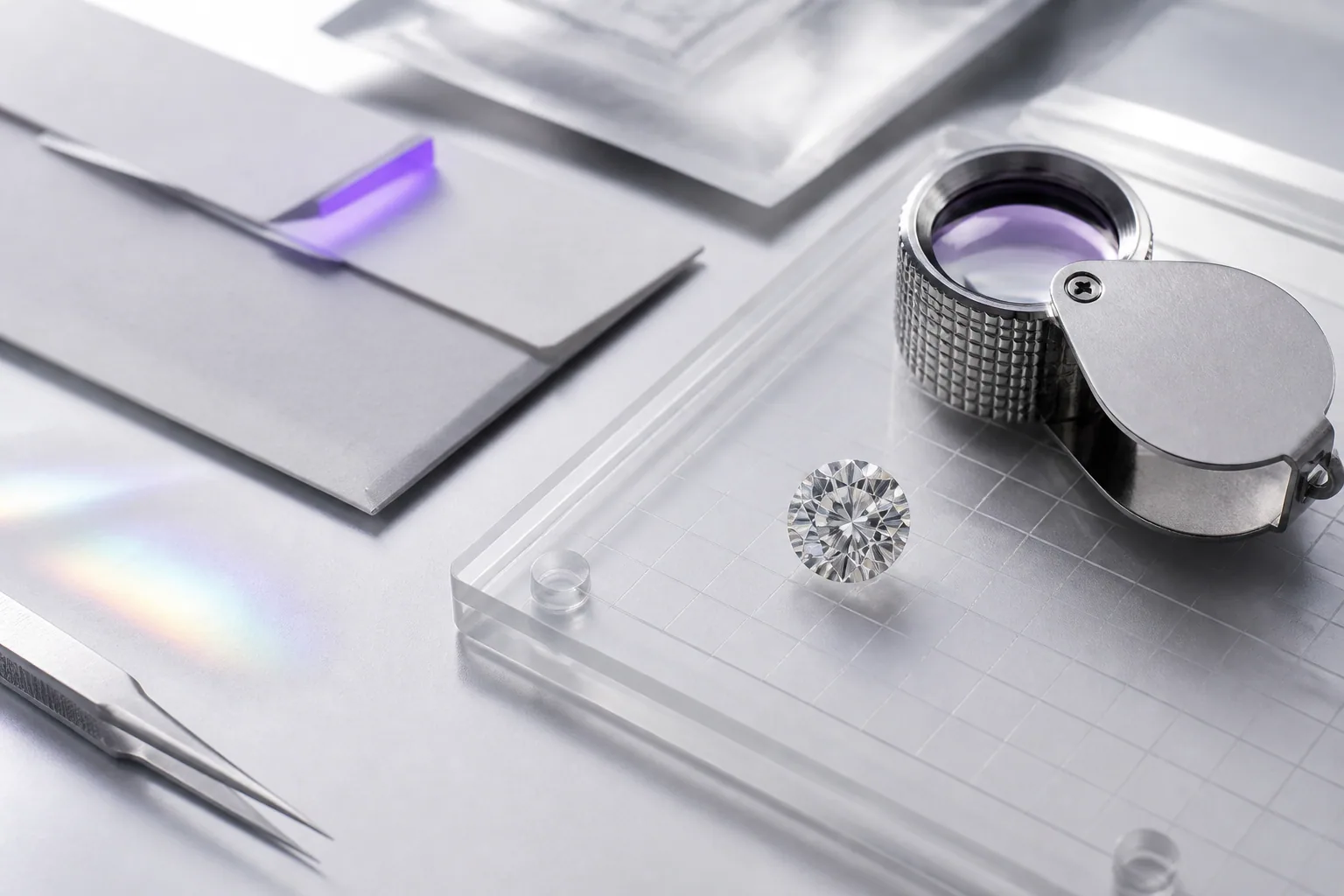
Before approving a wholesale lab grown diamond sample order, match each loose stone to an agreed specification, its grading report where supplied, and a unique order line. Confirm shape, dimensions, the 4Cs, report number, delivery expectations and repeat-order criteria in writing. A sample should answer a purchasing question, with clear conditions for acceptance.
Define what the sample order must establish
Start with the intended use: reviewing stones for a jewelry collection, assessing a proposed assortment, or checking a sourcing relationship before a larger purchase. These purposes may require different samples. Ask whether the proposed stones represent the assortment you intend to reorder, and identify any requested characteristics that the sample will not cover.
Distinguish approval of the individual sample from approval of future supply. Receiving an acceptable stone does not establish the availability or consistency of later orders. Ask the supplier which characteristics can be specified again, what may vary between stones, and how a future assortment will be presented for your approval.
Build a stone-by-stone specification record
Use one order line per stone when individual identification is needed. If the quotation groups stones together, request enough detail to connect each sample with its own documentation. Keep the requested specification and the supplier's proposed specification separate so that an alternative is visible before payment, rather than discovered during inspection.
Shape and dimensions: record the requested shape and measurements. Ask which dimensions will be supplied for that shape and whether any dimensional acceptance range can be agreed for your jewelry design.
The 4Cs: list carat weight, color, clarity and cut information as applicable. Ask how cut is described for the selected shape rather than assuming every report uses the same grading fields.
Identification: request the supplier's stone reference, the proposed report issuer and report number where available. Ask how the loose stone and its packaging will be linked to that record.
For a pair or a coordinated group, explain what matching means for your purchase. Ask the supplier to document the proposed stones together and identify differences for review. Approval should refer to that specific selection; a general description such as a matching pair leaves too much room for different interpretations.
Match the report, the stone and the order
If an IGI report is proposed, use IGI's report verification entry to check the report record. Compare the number and listed details with the document supplied for your sample. This is a document check: it does not by itself establish that the physical stone received is the stone described in the report.
Ask what identification method will support the physical match and what evidence can accompany dispatch. If an inscription is offered as part of that process, ask whether it is present on the particular sample and how you should check it. Keep the report number, stone reference and order line together throughout receiving and review.
Use a practical checklist before payment
Send the supplier one consolidated checklist and request written answers against the quotation. Unanswered items should remain open questions, not assumptions about standard service. This gives purchasing and receiving staff the same basis for checking the sample.
Scope: which exact stones, quantities, reports and supporting records are included? Are the proposed samples currently available, subject to sourcing, or awaiting confirmation?
Commercial terms: what sample charges, payment terms and minimum order requirements apply? Which delivery costs are included, and what return or replacement conditions can be agreed?
Timing: what dispatch date and estimated arrival window are proposed? Which dates remain conditional, and how will the supplier communicate a delay or a sourcing change?
Acceptance: who will inspect the sample, what records will be checked, and within what agreed review period? What should happen if the received stone or documentation differs from the confirmed order?
Record acceptance and set repeat-order expectations
On receipt, reconcile the package contents with the confirmed order before recording acceptance. Log missing documents, unexplained substitutions or specification differences against the relevant stone reference. Preserve the supplier's response alongside your inspection notes so that an unresolved issue does not disappear into a general approval email.
For repeat purchases, retain the approved specification and note which features mattered to the decision. Ask whether subsequent stones will need fresh selection approval and their own report checks. Agree how proposed differences will be disclosed before an order is confirmed; sample acceptance should not silently authorize substitutions.
Frequently asked questions
Does a verified report complete sample approval?
No. You still need to connect the report to the physical stone and confirm that both match the agreed order. Document verification is one part of acceptance.
Can one sample establish repeat-order consistency?
No. It can support approval of that stone. Ask separately about future selection, available specifications and how differences between proposed stones will be reviewed.
What should I include in an RFQ?
Send DiamovaLab your intended jewelry use, preferred shapes, dimensions, 4C requirements, sample quantities and report preferences. Include your desired timing and repeat-order priorities. Request confirmation of the proposed stones, documentation, availability and commercial terms before deciding whether the sample order meets your needs.
Explore the related product route
Review quality and traceability
Discuss the requirements behind your project.
Talk to DiamovaLab