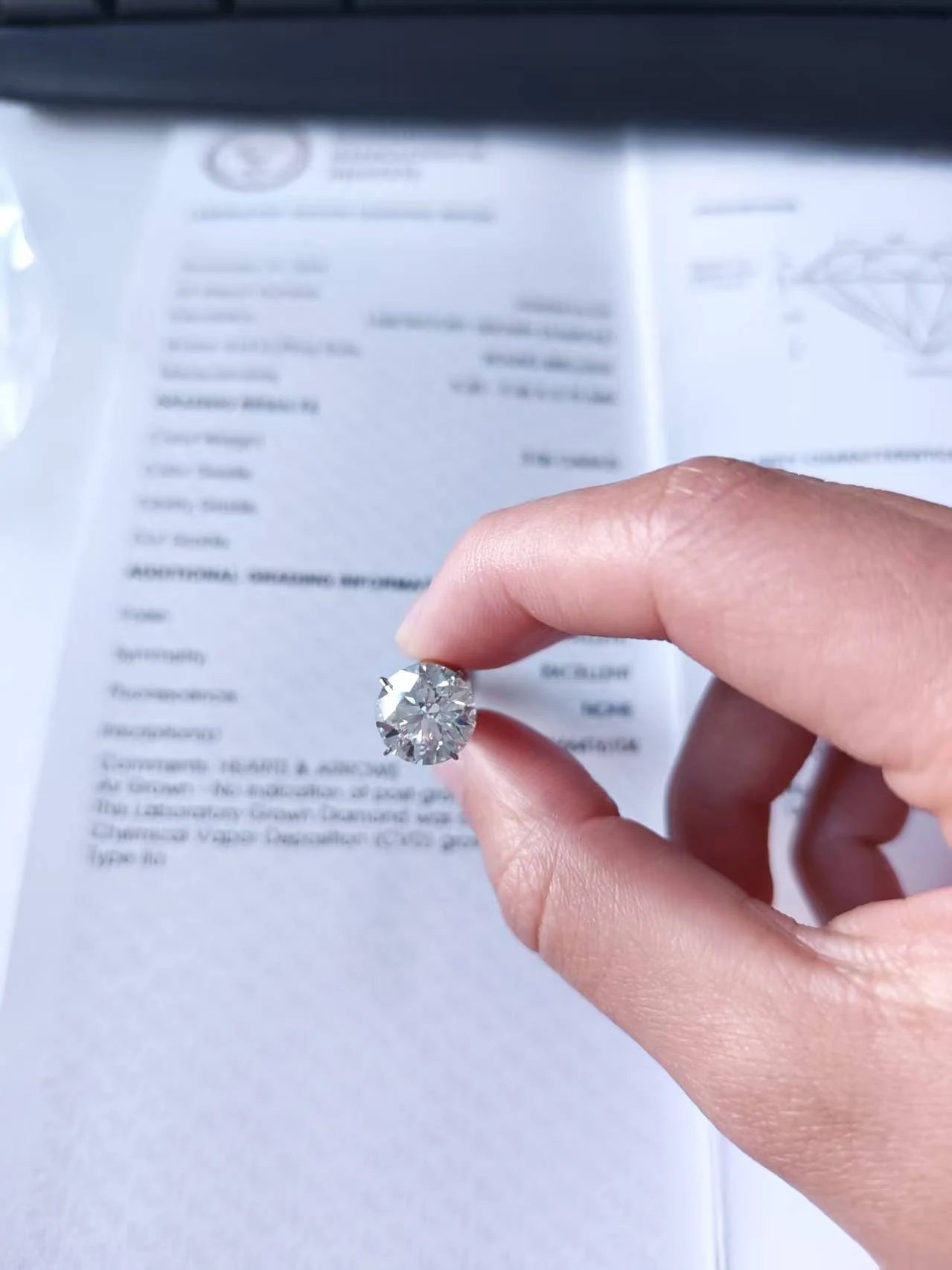
How do CVD and HPHT growth routes differ?
HPHT growth uses high pressure and temperature with a growth environment around a diamond seed. CVD uses a lower-pressure gas-phase process in which activated carbon species add to a seed or substrate.
The two methods can produce gem-quality laboratory-grown diamonds, and method identification forms part of professional disclosure. Growth route alone does not replace grading, treatment disclosure or item identity.
What should jewelry buyers compare?
For jewelry sourcing, the commercial decision is made on the actual stone or controlled parcel: shape, size or carat, color, clarity, cut, method, treatment evidence, report, inscription, matching, quantity and availability.
Report fields depend on the laboratory, service and issue date. GIA currently uses Premium or Standard quality assessments for colorless to near-colorless laboratory-grown diamonds; its colored-diamond reports include growth-type and post-growth treatment assessments. Read the actual report, verify its number and match it to the stone before relying on any disclosure.
- Keep CVD and HPHT disclosure at item or series level.
- Do not infer live stock from a grading document.
- Do not describe a treated CVD stone as “as-grown” unless the report supports that wording.
- For pairs or parcels, add matching and consistency criteria beyond individual grades.
What changes in an industrial materials context?
Industrial CVD diamond can be discussed as films, plates and other engineered forms, while HPHT material may appear in other industrial product routes. The relevant comparison depends on application, crystal form, dimensions, impurities, surface, properties and downstream integration.
DiamovaLab currently uses CVD industrial material pages and does not present an HPHT industrial product line without verified product evidence. This article is a method comparison, not a product-availability claim.
How should a buyer write a method-aware specification?
State whether the growth method is mandatory, preferred or simply must be disclosed. Then add the fields that control acceptance: jewelry grades and report requirements, or industrial geometry, property, surface and test conditions.
This approach prevents method names from replacing the product evidence that actually determines fitness and price.
Primary technical sources used for this guide
Sources explain the technical background. They do not certify DiamovaLab products, facilities, processes or customer results.
- Diamond ResearchGemological Institute of America
Recognition of CVD and HPHT as gem-quality laboratory-grown diamond methods.
- Laboratory-Grown Diamond ServicesGemological Institute of America
Current report types, quality assessment categories and report-specific growth and treatment disclosures.